India’s Literary Legacy: Famous Books Written by Indians

India has produced generations of writers whose stories, ideas, and characters have reached readers far beyond the country. From powerful novels about society and identity to works exploring history, family, culture, and human relationships, Indian literature has developed a distinctive place in global publishing.
Writers such as Rabindranath Tagore, R.K. Narayan, Ruskin Bond, Arundhati Roy, Vikram Seth, Chetan Bhagat, and Amish Tripathi have introduced readers to different aspects of Indian life, culture, and imagination.


Published in English in 1912, Rabindranath Tagore’s Gitanjali became one of the most internationally recognized works of Indian literature. The collection brought together poems originally written in Bengali, exploring spirituality, nature, devotion, humanity, and the relationship between the individual and the divine.
Tagore translated many of the poems himself, helping introduce his writing to readers outside Bengal and India. The English edition received significant international attention and contributed to Tagore being awarded the Nobel Prize in Literature in 1913.
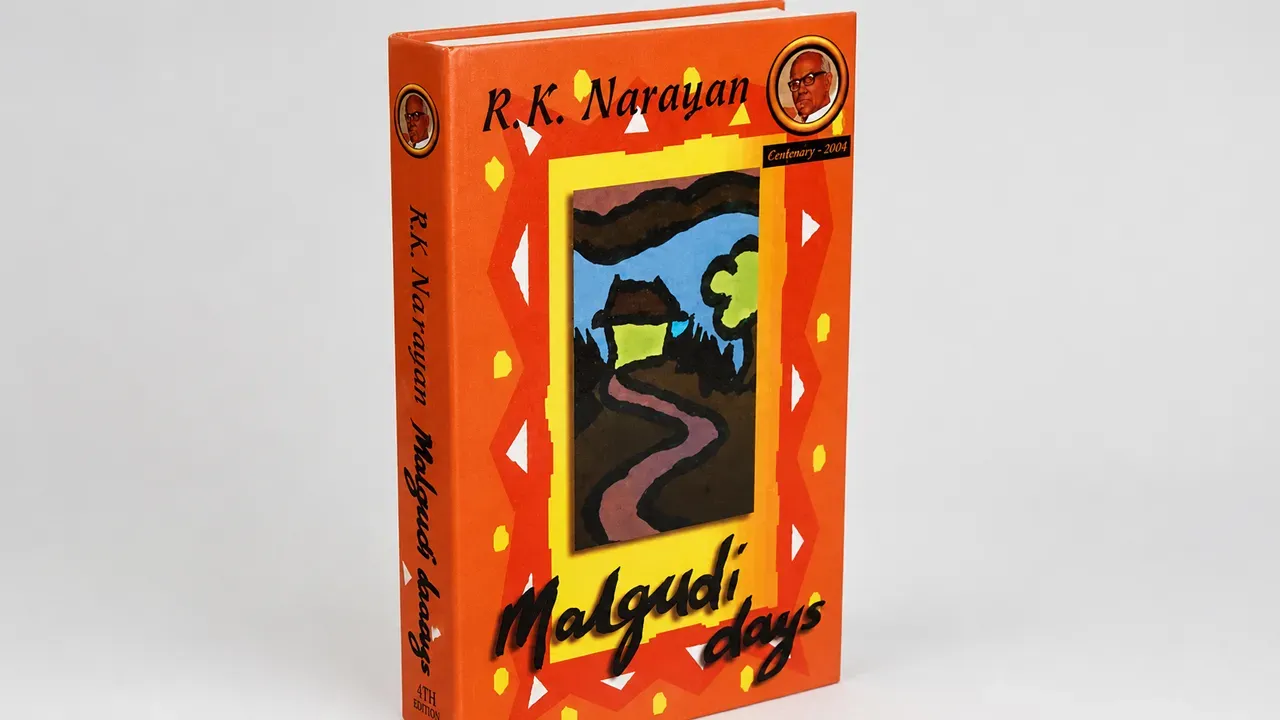
Few fictional places are as recognizable in Indian literature as Malgudi, the imaginary South Indian town created by R.K. Narayan. His collection Malgudi Days, first published in 1943, features interconnected stories about ordinary people navigating everyday life.
Narayan’s writing is known for its simplicity, gentle humour, and close observation of human behaviour. Instead of relying on dramatic events, his stories often find meaning in schoolchildren, shopkeepers, teachers, families, travellers, and other everyday characters.

Ruskin Bond’s The Room on the Roof introduced readers to Rusty, a teenage Anglo Indian boy growing up in the fictional town of Dehra. Published in 1956, the novel was Bond’s first published work and won the John Llewellyn Rhys Prize.
The book established many of the qualities that would become closely associated with Bond’s writing, including his affection for nature, small towns, childhood, friendship, and the quiet details of everyday life.
Bond went on to become one of India’s most beloved writers, producing novels, short stories, essays, and children’s books across a career spanning decades.

Published in 1993, Vikram Seth’s A Suitable Boy is one of the most celebrated Indian novels written in English. Set in post independence India, the sprawling story follows Lata Mehra as her family searches for a suitable husband for her while she tries to understand her own hopes, choices, and ambitions.
The novel brings together romance, family relationships, politics, religion, and social change. Through its large cast of characters and detailed settings, Seth presents a rich picture of Indian society during a period of significant transformation.

Published in 2010, Amish Tripathi’s The Immortals of Meluha became a major bestseller and introduced a new generation of readers to Indian mythology through contemporary fiction. The novel reimagines the story of Shiva, presenting him as a human leader whose journey eventually leads him to become the central figure of the story’s mythology.
The book combines mythology, adventure, philosophy, romance, and political conflict while drawing inspiration from ancient Indian traditions. Its accessible storytelling helped make the novel popular among younger readers and sparked renewed interest in mythological fiction.
India has produced generations of writers whose stories, ideas, and characters have reached readers far beyond the country. From powerful novels about society and identity to works exploring history, family, culture, and human relationships, Indian literature has developed a distinctive place in global publishing.
India has produced generations of writers whose stories, ideas, and characters have reached readers far beyond the country. From powerful novels about society and identity to works exploring history, family, culture, and human relationships, Indian literature has developed a distinctive place in global publishing.
Writers such as Rabindranath Tagore, R.K. Narayan, Ruskin Bond, Arundhati Roy, Vikram Seth, Chetan Bhagat, and Amish Tripathi have introduced readers to different aspects of Indian life, culture, and imagination.
Published in English in 1912, Rabindranath Tagore’s Gitanjali became one of the most internationally recognized works of Indian literature. The collection brought together poems originally written in Bengali, exploring spirituality, nature, devotion, humanity, and the relationship between the individual and the divine.
Tagore translated many of the poems himself, helping introduce his writing to readers outside Bengal and India. The English edition received significant international attention and contributed to Tagore being awarded the Nobel Prize in Literature in 1913.
Few fictional places are as recognizable in Indian literature as Malgudi, the imaginary South Indian town created by R.K. Narayan. His collection Malgudi Days, first published in 1943, features interconnected stories about ordinary people navigating everyday life.
Narayan’s writing is known for its simplicity, gentle humour, and close observation of human behaviour. Instead of relying on dramatic events, his stories often find meaning in schoolchildren, shopkeepers, teachers, families, travellers, and other everyday characters.
Ruskin Bond’s The Room on the Roof introduced readers to Rusty, a teenage Anglo Indian boy growing up in the fictional town of Dehra. Published in 1956, the novel was Bond’s first published work and won the John Llewellyn Rhys Prize.
The book established many of the qualities that would become closely associated with Bond’s writing, including his affection for nature, small towns, childhood, friendship, and the quiet details of everyday life.
Bond went on to become one of India’s most beloved writers, producing novels, short stories, essays, and children’s books across a career spanning decades.
Published in 1993, Vikram Seth’s A Suitable Boy is one of the most celebrated Indian novels written in English. Set in post independence India, the sprawling story follows Lata Mehra as her family searches for a suitable husband for her while she tries to understand her own hopes, choices, and ambitions.
The novel brings together romance, family relationships, politics, religion, and social change. Through its large cast of characters and detailed settings, Seth presents a rich picture of Indian society during a period of significant transformation.
Published in 2010, Amish Tripathi’s The Immortals of Meluha became a major bestseller and introduced a new generation of readers to Indian mythology through contemporary fiction. The novel reimagines the story of Shiva, presenting him as a human leader whose journey eventually leads him to become the central figure of the story’s mythology.
The book combines mythology, adventure, philosophy, romance, and political conflict while drawing inspiration from ancient Indian traditions. Its accessible storytelling helped make the novel popular among younger readers and sparked renewed interest in mythological fiction.